

Hey there! As a supplier of prefabricated substations, I've seen firsthand the importance of ensuring their reliability. In this blog, I'll share some tips and insights on how to make sure your prefabricated substation works like a charm.
1. High - quality Materials Selection
The foundation of a reliable prefabricated substation lies in the materials used. We always opt for top - notch components. For example, when it comes to the transformer, we choose those with high - efficiency cores and low - loss windings. These transformers can handle large loads without overheating, which is crucial for long - term operation.
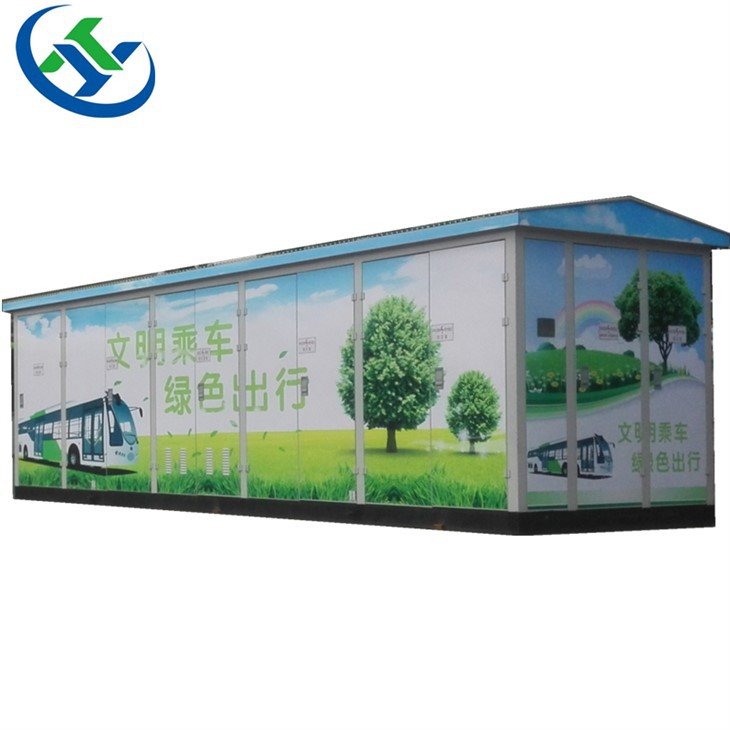

The switchgear is another key part. We use high - quality circuit breakers that can quickly and accurately cut off the power in case of a fault. This prevents damage to other equipment in the substation and ensures the safety of the entire power system.
Also, the enclosure of the prefabricated substation should be made of durable materials. It needs to be weather - resistant, corrosion - resistant, and able to protect the internal components from environmental factors. For instance, a steel enclosure with a good anti - rust coating can last for decades, even in harsh outdoor conditions.
2. Rigorous Design and Engineering
A well - designed prefabricated substation is half the battle won. Our engineering team spends a lot of time on detailed design. They consider various factors such as the load requirements, the environmental conditions of the installation site, and future expansion possibilities.
We use advanced software to simulate the operation of the substation under different scenarios. This helps us identify potential problems in advance and make necessary adjustments to the design. For example, if the simulation shows that there might be over - voltage issues in a certain area, we can add appropriate voltage - regulating devices to the design.
Moreover, the layout of the components inside the substation is carefully planned. The cables are routed in an organized way to avoid interference and short - circuits. The ventilation system is also designed to ensure proper cooling of the equipment, which is essential for maintaining its performance and reliability.
3. Strict Manufacturing Process Control
During the manufacturing process, we implement strict quality control measures. Every step is closely monitored to ensure that the substation meets the highest standards.
We have a team of experienced technicians who conduct regular inspections. They check the dimensions, the installation of components, and the electrical connections. Any deviation from the design specifications is immediately corrected.
For example, when assembling the switchgear, the technicians make sure that all the contacts are properly tightened. Loose contacts can lead to overheating and eventually cause a failure. We also use automated testing equipment to perform electrical tests on the substation at different stages of production. This includes insulation resistance tests, dielectric strength tests, and short - circuit tests.
4. Comprehensive Testing before Delivery
Before sending the prefabricated substation to the customer, we conduct a series of comprehensive tests. These tests are designed to simulate real - world operating conditions and ensure that the substation functions perfectly.
The first test is the factory acceptance test (FAT). In this test, we run the substation under normal load conditions for a certain period. We monitor the electrical parameters such as voltage, current, and power factor to make sure they are within the specified range.
We also perform a series of fault tests. For example, we simulate a short - circuit fault to check if the protective devices can quickly and accurately cut off the power. If any problem is detected during the tests, we will thoroughly investigate and fix it before the substation leaves the factory.
5. Professional Installation and Commissioning
Even the most reliable prefabricated substation needs proper installation and commissioning to work well. Our installation team is highly trained and experienced. They follow strict installation procedures to ensure that the substation is installed correctly.
First, they prepare the installation site. The foundation needs to be level and strong enough to support the weight of the substation. Then, they carefully install the substation on the foundation and connect all the electrical and mechanical components.
During the commissioning process, we conduct a final check of all the systems. We adjust the settings of the protective devices, calibrate the measuring instruments, and make sure that the communication systems are working properly. Only after everything is verified to be in good condition will we hand over the substation to the customer.
6. Regular Maintenance and Monitoring
Once the prefabricated substation is in operation, regular maintenance is essential to keep it reliable. We provide our customers with a detailed maintenance plan.
The maintenance includes tasks such as cleaning the equipment, checking the electrical connections, and lubricating the moving parts. We also recommend regular inspections of the insulation materials to detect any signs of degradation early.
In addition to regular maintenance, continuous monitoring is also important. We can install monitoring systems in the substation to collect real - time data on various parameters such as temperature, voltage, and current. This data can be analyzed to predict potential problems and take preventive measures in advance.
7. Upgrading and Retrofit
As technology advances and the load requirements change, it may be necessary to upgrade or retrofit the prefabricated substation. We offer upgrade services to our customers.
For example, if the customer needs to increase the capacity of the substation, we can replace the transformer with a larger one. We can also upgrade the control systems to improve the automation and intelligence of the substation.
Retrofitting can also be done to improve the safety and reliability of the substation. For instance, we can install new protective devices or upgrade the grounding system.
Types of Prefabricated Substations
We offer a variety of prefabricated substations to meet different customer needs. One of our popular products is the ZBW Type Prefabricated Substation. It is widely used in urban and rural power distribution systems. With its compact design and high - performance components, it provides a reliable and cost - effective solution for power supply.
Another type is the Prefabricated Substation for EV Charging Piles. As the demand for electric vehicles grows, the need for reliable charging infrastructure also increases. Our prefabricated substation for EV charging piles is specifically designed to meet this demand. It can provide stable power supply for multiple charging piles and ensure the safety and efficiency of the charging process.
Conclusion
Ensuring the reliability of a prefabricated substation is a multi - step process that involves high - quality materials, rigorous design, strict manufacturing control, comprehensive testing, professional installation, regular maintenance, and timely upgrading. As a supplier, we are committed to providing our customers with the most reliable prefabricated substations.
If you are in the market for a prefabricated substation, whether it's for a small commercial building or a large - scale industrial project, we'd love to have a chat with you. We can offer you customized solutions based on your specific requirements. Contact us for more information and let's discuss how we can meet your power needs.
References
- Electrical Power Systems: Design and Analysis, Second Edition by Saadat, Hadi
- Handbook of Electrical Engineering by Del Toro, V.
- Prefabricated Substation Design and Application Guidelines by Industry Standards Organization