

Hey there! As a supplier of Amorphous Alloy Cast Resin Transformers, I often get asked about the starting current of these nifty devices. So, let's dive right in and break it down.
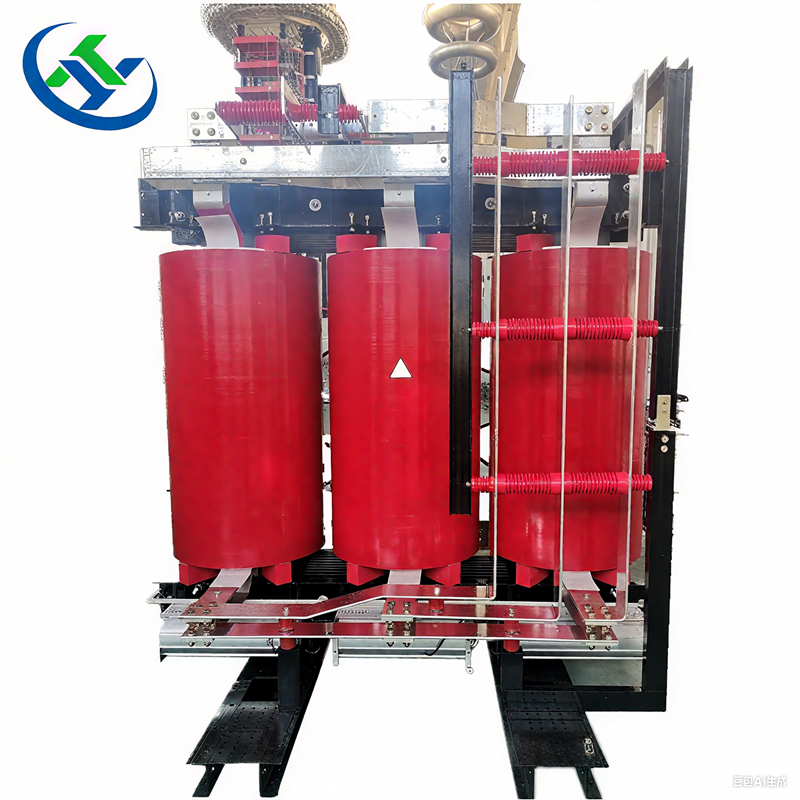
First off, what's an Amorphous Alloy Cast Resin Transformer? Well, it's a type of dry - type transformer. The amorphous alloy core in these transformers has really low core losses compared to traditional silicon steel cores. This makes them super energy - efficient, which is a big plus in today's world where everyone's looking to save on energy costs and be more environmentally friendly.
Now, let's talk about the starting current. The starting current, also known as the inrush current, is the current that flows through the transformer when it's first energized. When you switch on an Amorphous Alloy Cast Resin Transformer, there's a brief moment when the current spikes way higher than the normal operating current.
Why does this happen? It all boils down to the magnetic properties of the transformer's core. When the transformer is off, the magnetic field in the core is at zero. When you suddenly apply voltage, the core has to quickly build up its magnetic field. This rapid change in the magnetic field induces a large current in the windings of the transformer.
The magnitude of the starting current in an Amorphous Alloy Cast Resin Transformer can vary depending on a few factors. One of the main factors is the residual magnetism in the core. If there's some residual magnetism left in the core from the previous operation, it can either add to or subtract from the magnetic field being built up during startup. If the residual magnetism is in the same direction as the magnetic field being created during startup, it can cause a larger inrush current.
Another factor is the point on the voltage waveform at which the transformer is energized. If the transformer is switched on at the peak of the voltage waveform, the inrush current is likely to be higher compared to when it's switched on at other points on the waveform.
Typically, the starting current of an Amorphous Alloy Cast Resin Transformer can be anywhere from 5 to 10 times the normal full - load current. But this is just a rough estimate. In some cases, it could be even higher, especially if the transformer has a large capacity or if there are specific conditions that lead to a more significant build - up of the magnetic field during startup.
Now, you might be wondering if this high starting current is a problem. Well, it can be. A very high inrush current can cause issues like voltage dips in the electrical system. These voltage dips can affect other equipment connected to the same electrical network. For example, sensitive electronic devices might malfunction or shut down due to the sudden drop in voltage.
Also, the high starting current can put stress on the transformer's windings and other components. Over time, this repeated stress can lead to wear and tear, reducing the lifespan of the transformer.

So, what can be done to manage the starting current? There are a few methods. One common method is to use a soft - start device. A soft - start device gradually ramps up the voltage applied to the transformer, instead of applying it all at once. This allows the magnetic field in the core to build up more slowly, reducing the magnitude of the inrush current.
Another approach is to use a pre - magnetization technique. This involves applying a small DC voltage to the transformer's windings before the main AC voltage is applied. The DC voltage helps to establish a certain level of magnetic field in the core, which can reduce the inrush current when the AC voltage is finally applied.
As a supplier, we understand the importance of managing the starting current in our Amorphous Alloy Cast Resin Transformers. That's why we make sure to design our transformers with features that help to minimize the inrush current. We also offer technical support to our customers to help them properly install and operate the transformers to reduce the impact of the starting current.
If you're in the market for a reliable and energy - efficient transformer, we've got a great range of products. For example, we have the Cast Resin Transformer for Railway. This transformer is specifically designed to meet the demanding requirements of railway applications, where reliability and safety are of utmost importance.
We also offer the Cast Resin Dry - Type Rectifier Transformer for Hydrogen Production. With the growing interest in hydrogen as a clean energy source, this transformer is ideal for powering the electrolysis process in hydrogen production plants.
And if you're looking for a general - purpose rectifier transformer, our Cast Resin Dry - Type Rectifier Transformer is a great option. It's built to last and can handle the rigors of continuous operation.
If you're interested in learning more about our Amorphous Alloy Cast Resin Transformers or have any questions about the starting current or other technical aspects, don't hesitate to reach out. We're here to help you find the right transformer for your specific needs and ensure that it operates smoothly and efficiently. Whether you're a small business or a large industrial facility, we've got the expertise and the products to meet your requirements. So, let's start a conversation and see how we can work together to power your operations.
References:
- Electrical Power Systems: Analysis and Design by J. Duncan Glover, Mulukutla S. Sarma, and Thomas J. Overbye
- Transformer Engineering: Design, Technology, and Diagnostics by G. K. Dubey