

Hey there! As a supplier of Cast Resin Dry - Type Rectifier Transformers, I'm super excited to share with you how these amazing pieces of equipment work. So, let's dive right in!
Basics of a Transformer
First off, let's talk a bit about transformers in general. A transformer is a device that transfers electrical energy between two or more circuits through electromagnetic induction. It's got two main parts: the primary winding and the secondary winding. When an alternating current (AC) flows through the primary winding, it creates a changing magnetic field. This magnetic field then induces a voltage in the secondary winding, allowing power to be transferred from one circuit to another.
What Makes a Cast Resin Dry - Type Rectifier Transformer Special
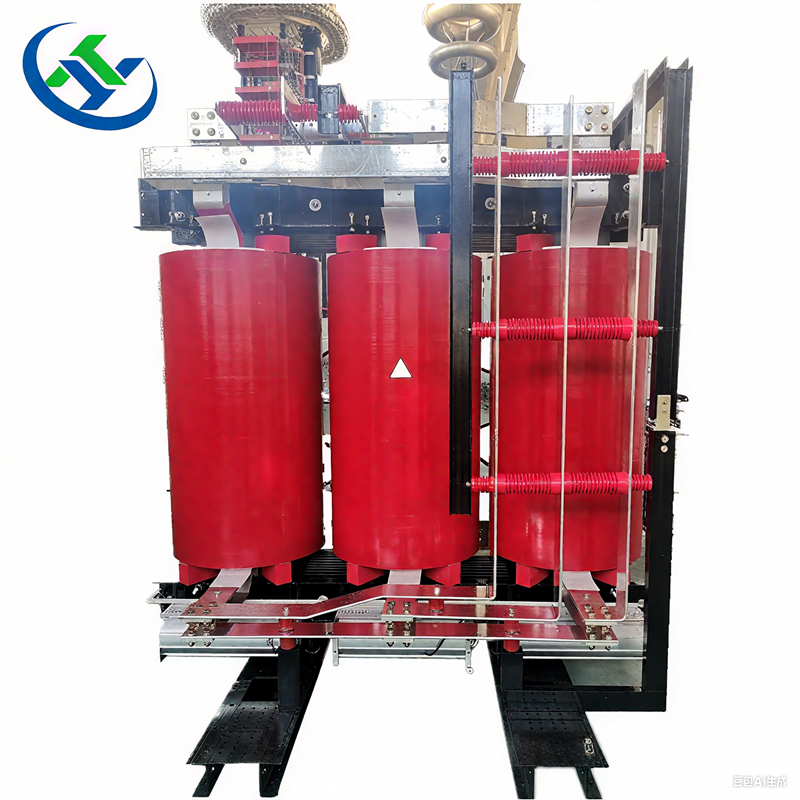
Now, a Cast Resin Dry - Type Rectifier Transformer is a bit different from your regular transformer. The "cast resin" part means that the windings are encapsulated in a resin material. This resin provides excellent electrical insulation, mechanical protection, and resistance to environmental factors like moisture, dust, and chemicals. The "dry - type" indicates that there's no liquid coolant involved, which makes it safer and more environmentally friendly compared to oil - filled transformers. And the "rectifier" function is what sets it apart from other dry - type transformers. It's designed to convert alternating current (AC) into direct current (DC).
The Working Principle Step by Step
1. AC Input
The process starts with an alternating current being fed into the primary winding of the transformer. This AC can come from a power grid or a generator. The primary winding is made up of a certain number of turns of wire, and the voltage and current in the primary winding depend on the characteristics of the input power source.
2. Magnetic Field Generation
As the AC flows through the primary winding, it creates a constantly changing magnetic field around the winding. This magnetic field expands and contracts in sync with the alternating current. The core of the transformer, usually made of a magnetic material like silicon steel, helps to concentrate and guide this magnetic field.
3. Induction in the Secondary Winding
The changing magnetic field produced by the primary winding cuts across the secondary winding. According to Faraday's law of electromagnetic induction, this induces an electromotive force (EMF) or voltage in the secondary winding. The ratio of the number of turns in the primary winding to the number of turns in the secondary winding determines the voltage transformation ratio. For example, if the secondary winding has more turns than the primary winding, the output voltage will be higher than the input voltage (step - up transformer), and vice versa for a step - down transformer.
4. Rectification Process
Once the AC voltage is induced in the secondary winding, it needs to be converted into DC. This is where the rectifier part comes in. The rectifier is usually made up of diodes. Diodes are electronic components that allow current to flow in only one direction. They act like a one - way valve for electricity.
There are different types of rectifier circuits, such as half - wave rectifiers and full - wave rectifiers. In a half - wave rectifier, only one half of the AC waveform is allowed to pass through, while in a full - wave rectifier, both halves of the AC waveform are used to produce a more continuous DC output. A common type of full - wave rectifier used in these transformers is the bridge rectifier, which consists of four diodes arranged in a bridge configuration.

5. Smoothing the DC Output
The DC output from the rectifier is not a perfectly smooth direct current. It still has some ripples or fluctuations. To get a more stable DC output, a smoothing capacitor is often used. The capacitor stores electrical energy during the peaks of the rectified waveform and releases it during the troughs, reducing the ripples and providing a more constant voltage.
Applications of Cast Resin Dry - Type Rectifier Transformers
These transformers have a wide range of applications. For example, they are used in railway systems. You can check out more about Cast Resin Transformer for Railway. In railway applications, they are used to convert the AC power from the grid into DC power for the trains' traction systems.
Another important application is in hydrogen production. Cast Resin Dry - Type Rectifier Transformer for Hydrogen Production is crucial for providing the DC power needed for the electrolysis process, which splits water into hydrogen and oxygen.
They are also used in offshore drilling platforms. Cast Resin Transformer for Offshore Drilling Platform can withstand the harsh marine environment and provide reliable power for the various equipment on the platform.
Advantages of Using Cast Resin Dry - Type Rectifier Transformers
Safety
Since there's no liquid coolant, there's no risk of oil spills or fires associated with oil - filled transformers. The resin - encapsulated windings also reduce the risk of electrical arcing and short - circuits.
Environmental Friendliness
They don't use any hazardous liquids, so they have a lower environmental impact. They are also more energy - efficient in some cases, which helps to reduce carbon emissions.
Low Maintenance
The cast resin construction provides good protection against environmental factors, which means less maintenance is required compared to other types of transformers.
High Reliability
The excellent insulation properties of the resin and the robust construction make these transformers highly reliable, even in demanding applications.
Why Choose Our Cast Resin Dry - Type Rectifier Transformers
As a supplier, we take pride in offering high - quality Cast Resin Dry - Type Rectifier Transformers. Our transformers are designed and manufactured to meet the highest industry standards. We use the latest technology and the best materials to ensure optimal performance and reliability.
We also offer customized solutions to meet the specific needs of our customers. Whether you need a transformer for a small - scale project or a large - scale industrial application, we can work with you to design and build the perfect transformer for your requirements.
If you're in the market for a Cast Resin Dry - Type Rectifier Transformer, I encourage you to get in touch with us. We'd be more than happy to discuss your needs and provide you with a quote. Our team of experts is always ready to answer any questions you might have and guide you through the procurement process.
References
- Electrical Engineering textbooks on transformers and power electronics
- Industry standards and guidelines for dry - type transformers