

Power quality is a critical aspect in the operation of prefabricated substations, directly influencing the efficiency, reliability, and lifespan of electrical equipment. As a prefabricated substation supplier, I understand the significance of ensuring high - quality power supply for various applications. In this blog, I will share some effective strategies to improve the power quality of a prefabricated substation.
Understanding Power Quality in Prefabricated Substations
Before delving into the improvement methods, it's essential to understand what power quality means in the context of prefabricated substations. Power quality refers to the degree to which the voltage, frequency, and waveform of an electrical power supply meet the requirements of electrical equipment. Poor power quality can lead to issues such as equipment malfunction, increased energy consumption, and premature equipment failure.
In prefabricated substations, common power quality problems include voltage sags and swells, harmonics, and power factor issues. Voltage sags are short - term reductions in voltage, while swells are short - term increases. Harmonics are unwanted frequencies in the electrical system, which can cause overheating in transformers and other equipment. A low power factor means that the electrical system is not using the electrical energy efficiently.
Strategies to Improve Power Quality
1. Voltage Regulation
One of the primary ways to improve power quality is through effective voltage regulation. Prefabricated substations should be equipped with voltage regulators to maintain a stable voltage level. Automatic voltage regulators (AVRs) can sense changes in the input voltage and adjust the output voltage accordingly. These regulators can be installed at the transformer level or at the distribution panels within the substation.
For example, in a Prefabricated Substation for EV Charging Piles, stable voltage is crucial to ensure the safe and efficient charging of electric vehicles. An AVR can prevent voltage sags and swells that could potentially damage the charging equipment or cause charging inefficiencies.
2. Harmonic Filtering
Harmonics are a common problem in prefabricated substations, especially in modern electrical systems with a high number of non - linear loads such as variable frequency drives and LED lighting. To mitigate the effects of harmonics, harmonic filters can be installed.
There are two main types of harmonic filters: passive and active. Passive harmonic filters are made up of capacitors, inductors, and resistors and are designed to block or absorb specific harmonic frequencies. Active harmonic filters, on the other hand, use power electronics to generate a compensating current that cancels out the harmonic currents in the system.
In a ZBW Type Prefabricated Substation, which is often used in industrial and commercial applications, harmonic filtering is essential to protect sensitive equipment from the damaging effects of harmonics.
3. Power Factor Correction
A low power factor can result in increased energy consumption and higher electricity bills. Power factor correction (PFC) is the process of improving the power factor of an electrical system. This can be achieved by installing power factor correction capacitors.
These capacitors work by providing reactive power to the system, reducing the amount of reactive power drawn from the utility. By improving the power factor, the prefabricated substation can operate more efficiently, and the overall energy consumption can be reduced.
4. Surge Protection
Surges are sudden increases in voltage that can occur due to lightning strikes, switching operations, or other electrical disturbances. Surge protection devices (SPDs) should be installed in prefabricated substations to protect electrical equipment from damage caused by surges.

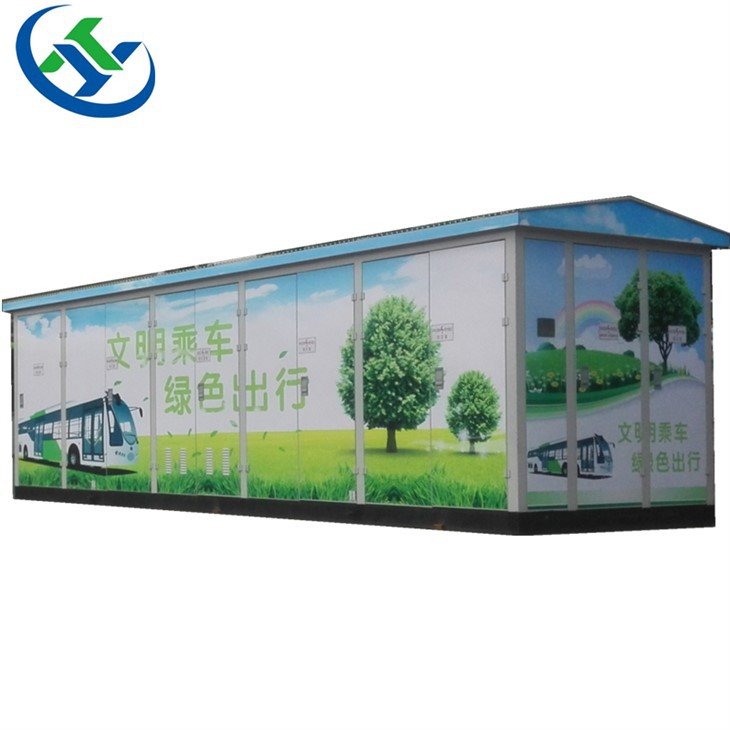
SPDs work by diverting the excess voltage to the ground when a surge occurs. They can be installed at the incoming power lines, at the transformer, and at the distribution panels. In addition to protecting the equipment, surge protection can also improve the overall reliability of the prefabricated substation.
5. Monitoring and Maintenance
Regular monitoring and maintenance are crucial for ensuring the long - term power quality of a prefabricated substation. Monitoring systems can be installed to continuously measure parameters such as voltage, current, power factor, and harmonic content.
By analyzing the data collected from these monitoring systems, potential power quality issues can be detected early, and appropriate measures can be taken to prevent them from escalating. Maintenance activities, such as checking the connections, testing the protection devices, and cleaning the equipment, should also be carried out regularly to ensure the proper operation of the substation.
Case Studies
Let's take a look at some real - world examples of how these strategies have been implemented to improve power quality in prefabricated substations.
Case 1: Industrial Substation
An industrial facility was experiencing frequent equipment failures and increased energy consumption due to poor power quality. The prefabricated substation serving the facility was upgraded with an AVR for voltage regulation, a passive harmonic filter to reduce harmonic distortion, and power factor correction capacitors.
After the upgrade, the voltage stability improved significantly, the harmonic content was reduced to an acceptable level, and the power factor increased from 0.8 to 0.95. As a result, the equipment failures decreased, and the energy consumption was reduced by 15%.
Case 2: Commercial Substation
A commercial building was using a ZBW Type Prefabricated Substation to supply power to its lighting, HVAC, and other electrical systems. The substation was experiencing voltage sags and swells, which were causing flickering lights and malfunctions in the HVAC system.
Surge protection devices were installed at the incoming power lines and at the distribution panels, and an active harmonic filter was added to address the harmonic issues. After the installation, the power quality improved, and the building's electrical systems operated more reliably.
Conclusion
Improving the power quality of a prefabricated substation is essential for ensuring the efficient and reliable operation of electrical equipment. By implementing strategies such as voltage regulation, harmonic filtering, power factor correction, surge protection, and regular monitoring and maintenance, the power quality of a prefabricated substation can be significantly enhanced.
As a prefabricated substation supplier, I am committed to providing high - quality products and solutions that meet the power quality requirements of our customers. If you are interested in improving the power quality of your prefabricated substation or are looking for a reliable prefabricated substation supplier, please feel free to contact us for further discussion and procurement negotiation.
References
- "Power Quality in Electrical Systems" by Roger C. Dugan, Mark F. McGranaghan, and Surya Santoso.
- "Handbook of Electric Power Calculations" by Hadi Saadat.
- IEEE Standards for Power Quality Monitoring and Analysis.